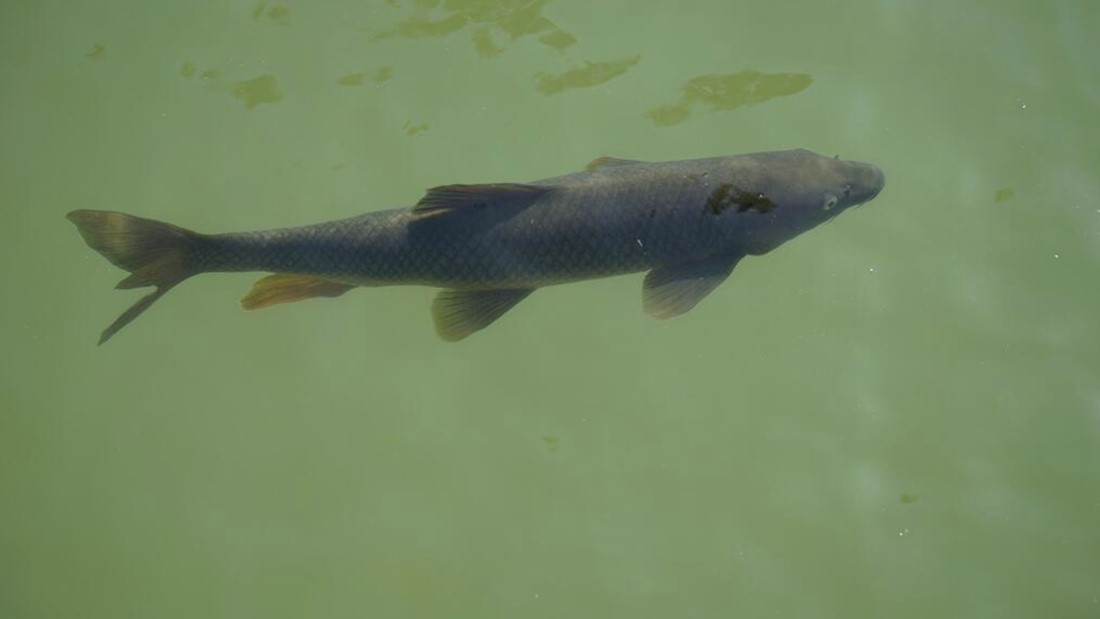
At 5am in Nkasala Village, Vincent Khofi is already checking his ponds. The water is still and the air smells of mud and fish.
Khofi inherited eight fish ponds from his late grandparents. Today, working with his mother, Dorothy Twaibu, the ponds provide food for the family, pay school fees and generate income to support relatives.
“I started fish farming after inheriting the ponds from my grandparents. Together with my mother, we are able to support our family with food and pay school fees from the money we get from fish sales,” Khofi said.
His experience reflects a growing interest in aquaculture among Malawian farmers looking for ways to strengthen household incomes and food security at a time when climate change is making traditional farming increasingly unpredictable.
For thousands of households that depend on agriculture and natural resources, changing rainfall patterns, prolonged dry spells and floods are putting pressure on livelihoods.
Rain-fed maize production remains particularly vulnerable because farmers depend on a reliable rainy season for a good harvest.
The Malawi Vulnerability Assessment Committee projects that more than 2.5 million people will be at risk during the 2026-27 lean season, highlighting the continuing challenge of food insecurity.
At the same time, wild fish stocks in Lake Malawi have declined because of overfishing and climate pressures.
This has increased interest in fish farming as a way of supplementing catches from the lake while providing households with an alternative source of food and income.
For Khofi, the attraction is clear.
“Fish farming is profitable because apart from selling fresh fish, we also sell fingerlings to other customers,” he said.
Fish can be harvested in cycles, giving farmers opportunities to generate income at different times of the year. This can provide a useful alternative to relying entirely on a single maize harvest for food and cash.
But while aquaculture can offer greater livelihood security, it is not immune to climate change.
“When we are faced with drought, our production goes down because it means we only have one cycle of fish farming due to lack of water from the streams that depend on the amount of rain,” Khofi said.
His experience illustrates one of the biggest challenges facing small-scale fish farmers. Ponds require sufficient water, yet the same rainfall changes that affect crops can also threaten aquaculture.
When rains are inadequate, streams supplying ponds can dry up. Higher temperatures can increase evaporation, reducing water levels further.
Farmers who combine fish farming with crop production can also face losses when drought affects the crops on which their integrated systems depend.
This is driving efforts to make aquaculture more efficient and resilient.
One approach is integrated agriculture-aquaculture, in which fish farming is combined with crop production so that resources are reused rather than wasted.
Tiwonge Soko Nyirenda, an integrated agriculture-aquaculture specialist for Co-operative Development Foundation of Canada (CDF Canada), works with farmers in Zomba and seven other districts.
“We are working with individual farmers as well as fish farmer groups, encouraging them to adopt an integrated system whereby we utilise the synergies within the system to recycle resources from one product into another. This helps them cut costs and maximise profits,” Nyirenda said.
Under the model, water from fish ponds, which contains nutrients from fish waste, is used to irrigate crops. Instead of being discharged and lost, the water becomes an input into crop production.
Crop residues can also be used within the farming system, including as fish feed, creating a cycle in which waste from one activity can support another.
For smallholder farmers operating with limited resources, such integration can be important because the cost of inputs remains a major challenge.
CDF Canada is working in Chitipa, Mzimba, Rumphi, Dowa, Ntchisi, Nkhotakota, Thyolo and Zomba to promote these approaches among farmers.
Nyirenda said the organisation is also working with the Department of Fisheries and FishNet to promote value addition, allowing farmers to earn more from their fish rather than relying solely on fresh fish sales.
“Instead of just selling fresh fish, we process it into fish powder and other fish products that are sold at a higher price. Through this, farmers will be able to penetrate international markets,” she said.
Value addition can also help reduce losses when farmers have more fish than they can immediately sell as fresh produce.
Processing creates products that can be stored and marketed differently, potentially giving farmers more flexibility in when and where they sell.
The government is meanwhile promoting aquaculture as part of efforts to increase domestic fish production and reduce pressure on the country’s natural fisheries.
Kingsley Kamtambe, Deputy Director of Fisheries at Domasi Aquaculture Centre in Zomba, said the department is working to ensure farmers have access to quality fingerlings while promoting sustainable use of fish resources.
“In terms of fingerlings, we ensure that farmers have access to high-quality fingerlings. As a public institution, we produce high-quality fingerlings and sell them at an affordable price to increase accessibility for farmers,” Kamtambe said.
Malawi’s National Fisheries and Aquaculture Policy aims to increase domestic fish production to 100,000 metric tonnes by 2030, from about 14,000 tonnes currently.
Kamtambe acknowledged that reaching the target will require continued increases in production.
To support this ambition, the government has introduced programmes such as Aqua Pack in the Lower Shire for large-scale ponds and a cage aquaculture initiative on Lake Malawi, under which each district is encouraged to establish at least 100 cages.
The expansion of aquaculture also has implications for food and nutrition. Fish is an important source of protein and can contribute to more diverse diets, particularly in communities where household food supplies are under pressure.
This makes aquaculture relevant not only to income generation but also to efforts to address hunger and malnutrition.
However, expanding the sector while the climate is changing will require farmers to adopt practices that use water and other resources efficiently.
Experts say climate-smart aquaculture should therefore form part of Malawi’s adaptation efforts. Measures include rainwater harvesting, improved water management, appropriate fish species and integrated farming systems that allow farmers to make better use of available resources.
For farmers such as Khofi, resilience is about keeping ponds productive when rainfall is unreliable and ensuring that farming continues to provide food and income for the household.
“I encourage other people to do fish farming. It is productive and it can improve their lives,” he said.
But the experience of Nkasala also shows that aquaculture cannot be viewed in isolation from the wider agricultural and environmental challenges facing Malawi.
Farmers need access to water, quality fingerlings, technical knowledge, markets and affordable production systems if the sector is to deliver its full potential.
Officials say the future of Malawi’s fish sector will depend on combining farmer knowledge, government support and climate-resilient practices while ensuring that increased production does not create new pressure on natural resources.
“We try as much as possible to ensure that the utilisation of fish is sustainable so that future generations can also enjoy the benefits of the fishery sector,” Kamtambe said.
For now, in Nkasala Village, eight ponds are helping one family put food on the table, keep children in school and generate income in an increasingly uncertain climate.