For years, Malawi’s electricity supply has been at the mercy of droughts, floods and cyclones that have repeatedly exposed the vulnerability of a power system heavily dependent on hydropower. Cyclones Anna and Freddy damaged energy infrastructure and triggered prolonged blackouts that disrupted businesses, hospitals, schools and households, forcing the country onto expensive diesel generation to keep essential services running. Malawi is now betting on battery storage to make its network more resilient to climate shocks while accelerating its shift to renewable energy.
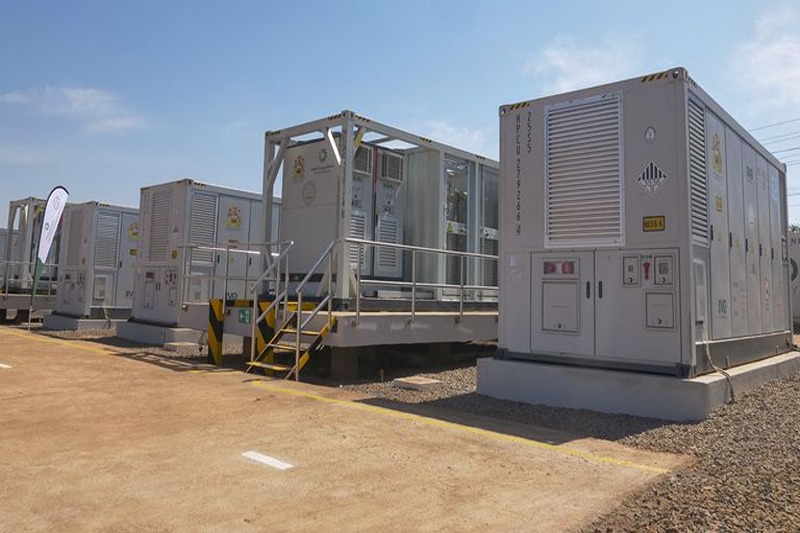
The country has commissioned its first standalone utility scale Battery Energy Storage System, a 20 megawatt, 40 megawatt hour facility in Kanengo, Lilongwe, developed by the Electricity Supply Corporation of Malawi with support from the Global Energy Alliance for People and Planet. Backed by a USD 20 million catalytic grant from GEAPP, the project is expected to stabilise the national grid, unlock roughly 100 megawatts of renewable electricity that has previously been curtailed, reduce reliance on diesel generators and avoid more than 10,000 tonnes of carbon emissions annually.
GEAPP’s Vice President for Africa, Carol Koech said the project represents more than another piece of infrastructure. “This project was envisioned after Cyclones Anna and Freddy exposed the fragility of Malawi’s hydropower-dependent grid. The Battery Energy Storage System (BESS) strengthens grid resilience by storing electricity and dispatching it instantly during peak demand or climate-related disruptions. It also reduces reliance on costly diesel backup generation while unlocking about 100 megawatts of renewable energy capacity that is currently being curtailed,” said Koech.
Unlike conventional power plants, battery storage does not generate electricity, but stores excess energy when demand is low and releases it when demand rises or generation falls, helping stabilise voltage and frequency across the network, a function energy experts say is becoming increasingly important as African countries expand renewable generation while confronting worsening climate impacts. For Malawi, where hydropower accounts for most electricity generation, prolonged droughts reduce river flows while floods and cyclones damage transmission infrastructure, making battery storage a critical adaptation tool.
Reliable electricity remains one of the biggest barriers to Malawi’s economic growth. Frequent blackouts force manufacturers to halt production, raise operating costs through diesel generation and discourage private investment, while agriculture, which employs most Malawians, depends increasingly on electricity for irrigation, agro processing and cold storage. Koech believes reliable power could transform these sectors.
“Energy plays a significant role in enabling resilient agricultural systems. Irrigation, agro-processing and cold storage all depend on reliable electricity. Having a stable grid means these activities can continue with minimal interruptions,” said Koech. She added that manufacturers and small businesses stand to benefit too. “A reliable electricity supply means manufacturers do not have to worry about production losses or the high costs associated with alternative power sources. Small businesses equally benefit because they can operate consistently without disruptions,” noted Koech. The project is expected to improve electricity reliability for households, industries and public services while supporting Malawi’s goal of expanding access to 70 percent by 2030.
Beyond national benefits, the project could strengthen Malawi’s role within the Southern African Power Pool, the regional electricity market linking several countries across the region. Malawi already has an interconnector with Mozambique, with additional connections to Zambia and Tanzania planned or under development. Koech said battery storage provides the grid stability countries need to participate effectively in regional trading. “Malawi is strategically positioned within the Southern African Power Pool. Battery storage strengthens grid stability, making it essential for cross-border electricity trade and regional energy security. As regional electricity markets continue evolving, resilient national grids will become increasingly important,” explained Koech. Better regional integration could let countries share electricity during shortages, improve renewable utilisation and cut the cost of maintaining reserve generation capacity.
The project also aims to strengthen Africa’s technical capacity in battery storage. Koech said it forms part of GEAPP’s wider effort to deploy 90 gigawatts of battery storage globally while building local expertise, with a Southern Africa BESS Centre of Excellence anchored at Mzuzu University set to train engineers and power sector specialists in battery operations, grid modelling and system integration. Koech said, “We are building a local ecosystem for battery storage in Africa. The Centre of Excellence will equip the next generation of African energy professionals with the technical skills needed to design, operate and manage these systems while allowing countries to learn from each other and reduce project delivery costs.” She shared that knowledge from Malawi’s experience would support similar projects elsewhere in southern Africa.
For GEAPP, Malawi’s project also proves that utility scale battery storage is commercially viable on the continent. Instead of relying on diesel generators to stabilise networks, utilities can increasingly use batteries for frequency regulation, voltage support and other ancillary grid services. “This project demonstrates that Africa is ready for utility-scale battery storage. It shows utilities can replace expensive diesel with battery systems that charge during periods of low demand and discharge during peak demand while providing critical grid services,” noted Koech. She ended with the belief that the demonstration effect could encourage greater public and private investment in modern electricity infrastructure continent wide. As African countries pursue ambitious renewable targets while confronting worsening climate extremes, battery storage is increasingly viewed not simply as an energy technology but as climate resilience infrastructure and for Malawi, the Kanengo project could become an important model for how clean energy investment strengthens resilience, expands access and stimulates sustainable growth.