Malawi’s near-total dependence on imported fertiliser is colliding with a geopolitical risk it cannot control and agroecologists say the disruption may force an overdue reckoning with the country’s soil health crisis. A 2022 policy brief from the MwAPATA Institute, produced in the immediate aftermath of Russia’s invasion of Ukraine, found that over 40% of Malawi’s soils have already lost productivity through poor farming practices, with acidification, floods, droughts and heavy synthetic fertiliser use contributing to annual losses of at least 2.3 million tons of maize.
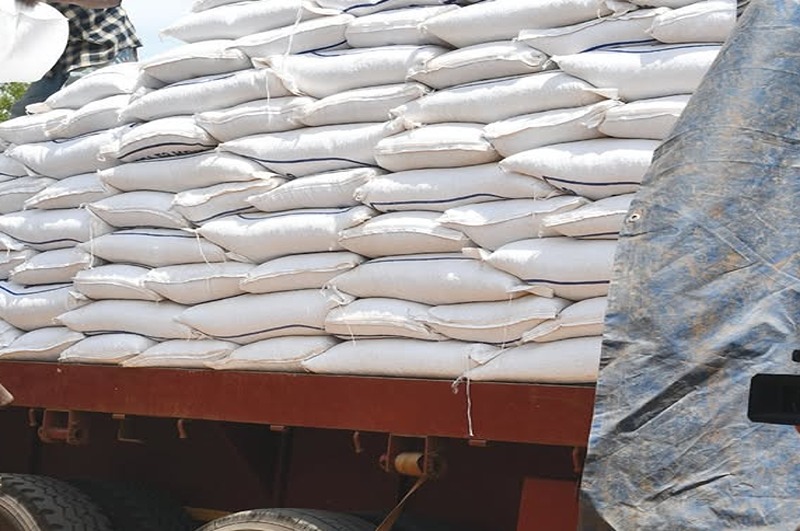
Food and Agriculture Organisation (FAO) notes that synthetic fertilisers, while critical for yields, can worsen soil acidification when applied without adequate organic matter or balanced management. In August 2025, Malawi launched a 10 year soil health plan intended to reverse fertility loss, one that still leans on expanded synthetic fertiliser use even as the country’s ability to secure that supply grows more precarious. Malawi imports nearly all of the more than 400,000 tons of fertiliser it needs annually, with roughly 90% of its nitrogen and phosphate imports in 2023 sourced from Gulf countries. Escalating tensions involving Iran now raise the risk of disruption through the Strait of Hormuz, a critical corridor for Gulf fertiliser exports, layering a new shock on top of ones already inflicted by Covid-19 and the Russia-Ukraine war.
The Fertilizer Association of Malawi, representing 20 private companies supplying over 90% of the country’s fertiliser, is careful to distinguish exposure from direct dependence. “For Malawi, the impact is likely to be indirect, mainly through higher procurement costs, longer lead times, and increased price volatility in global fertiliser markets,” said Hannah Mankhambera, the Association Administrator. She added that outcomes will hinge on the duration and severity of any disruption. Mankhambera stopped short of ruling out further price increases, “Given current market conditions, there is potential for continued price volatility.”
The numbers already tell part of the story, a 50kg bag of urea rose from $96 in December 2025 to $103 currently, with further increases expected heading into planting season. “Already this is too expensive for smallholder farmers,” said Maness Nkhata, President of the Farmers Union of Malawi, which represents over a million farmers, warning that further price rises would depress fertiliser access, maize harvests and food security alike. Food systems researcher Tamani Nkhono Mvula put the downstream effect plainly, “Increased fertiliser prices also means the price of maize will rise next year. Food will become more expensive.”
Malawi produces roughly 90% of its own food, though food imports have grown, doubling between 1998 and 2018 with a 64% surge from 2015-2016, and producing trade deficits of $13.59 million in 2016 and $14.58 million in 2017, per the Food Systems Profile – Malawi (2025) and related research. Against that backdrop, groups like the Participatory Ecological Land Use Management network (Pelum) see the supply shock as an opening rather than purely a threat, arguing that reduced synthetic fertiliser use could push farmers toward soil restoration and crop diversification. “With less synthetic fertiliser, the production shifts from maize to other crops such as cassava, sweet potatoes, millet and sorghum, which do well without fertiliser,” said Nozgenji Wendy Bilima, Coordinator of Pelum Malawi. She also challenged the assumption that all soils require synthetic inputs, “It’s just a blanket application, that’s the practice affecting the soils of our land. With the solubility of synthetic fertilisers, contamination of groundwater and surface water bodies is high, causing soil chemical imbalance.”
On the ground, the transition is uneven. Farmer manure trading has picked up as a sign of rising demand but smallholders like Singano illustrate the limits of substitution, he abandoned synthetic fertiliser in 2020 on cost grounds and now spends $29 a season on chicken manure at $3 per 50kg bag, yet remains unconvinced it fully replaces what he’s given up. “Fertiliser is fertiliser. The yield is higher with synthetic fertiliser but I cannot afford it. At the same time, not applying manure altogether would be disastrous. So that’s what I have to apply to my field now,” concluded Singano. For a country entering the planting season with its main input source hostage to a shipping chokepoint thousands of kilometres away, the disruption is exposing both the fragility of import dependence and the cost of decades spent underinvesting in domestic soil capital.